
Are you looking to purchase a new construction home? If you are, congratulations — and I have a few things to tell you that will save you money, headaches, and one very awkward conversation with the builder’s sales office.
Because a new home is not like a resale. You are not buying a house. You are buying a timeline, a contract, and a set of choices that you have to make before the house exists. I break it down in Episode 17 — and here is the plain-English version.
How the process actually works
New construction comes in three types. Quick move-in is a home the builder has already started (or finished) that you buy and move into as-is. Spec is a home built by the builder that you buy while it is under construction — you might get a few choices, but the bones are set. Dirt-start is where the buyer picks the lot and the floor plan and starts from scratch. That takes the longest, but it is the only way to get exactly the house you want.
Which type you buy changes everything about the process: how long you wait, how much you get to choose, and what you can negotiate. Quick move-in is the fastest. Dirt-start is the most custom. Spec is in between.
Getting to know your builder — what is actually included?
Before you decide on anything, get to know your builder’s standards. The most important question in the whole process: what is included in the base price? A lot of people think they are getting more than they are, because the model home is not the base home. The model is the upgraded version — nicer flooring, nicer countertops, nicer lighting. Your base-price home is not that home.
For example, a builder may provide you with one set of plans with a specific amount of square footage and amenities. Your neighbor may have a completely different configuration in the same model. That is because every community is different — even the upgrades differ between communities from the same builder. Ask what is included in the base price, and ask what every upgrade actually costs. Don’t assume. Get the list in writing.
To upgrade or not to upgrade
Once you have decided on the base price, you move to the design studio, where you choose your upgrades — flooring, appliances, fixtures, countertops, and everything else. My advice: pick the upgrades that are hard or impossible to change later (structural things, plumbing, electrical), and skip the ones you can change yourself for less after you move in.
Two things to know about upgrades. First, they cost real money — and on a new build, the earnest money deposit is usually $2,500 to $10,000 depending on the builder and the community, and that deposit is for a home that does not exist yet. Second, upgrades do not add value dollar for dollar. I had a client who spent a significant amount on upgrades using an FHA loan with 3.5% down — upgrading from carpet to hardwood flooring cost about $25,000, but the value of the home only went up about $10,000. We negotiated with the builder so the client did not have to pay the difference between the negotiated sale price and the lower appraised value. Without an agent negotiating, that outcome would have gone the builder’s way instead of the buyer’s.
Financing your build
You do not have to use the builder’s lender. You are free to use any lender you choose. Using the builder’s lender may come with benefits — priority processing, notification of new developments, and typically higher closing-cost credits. But most builders will still require you to pre-qualify with their lender, so expect that requirement. There are real benefits to using a lender other than the builder’s: more loan options, the ability to shop around for the best rates, more personalized service, and often better down payment assistance programs. Get a second quote before you sign — compare the total cost, not just the incentive.
For the loan math itself, the same FHA framework applies: 3.5% down at 580+ credit, FHA 30-year fixed 6.94%, upfront mortgage insurance 1.75% financed into the loan, annual mortgage insurance 0.55% (HUD Mortgagee Letter 2023-05, verified November 8, 2026). Run your price — base plus upgrades — in the Mortgage Payment Calculator.
Model homes versus your home
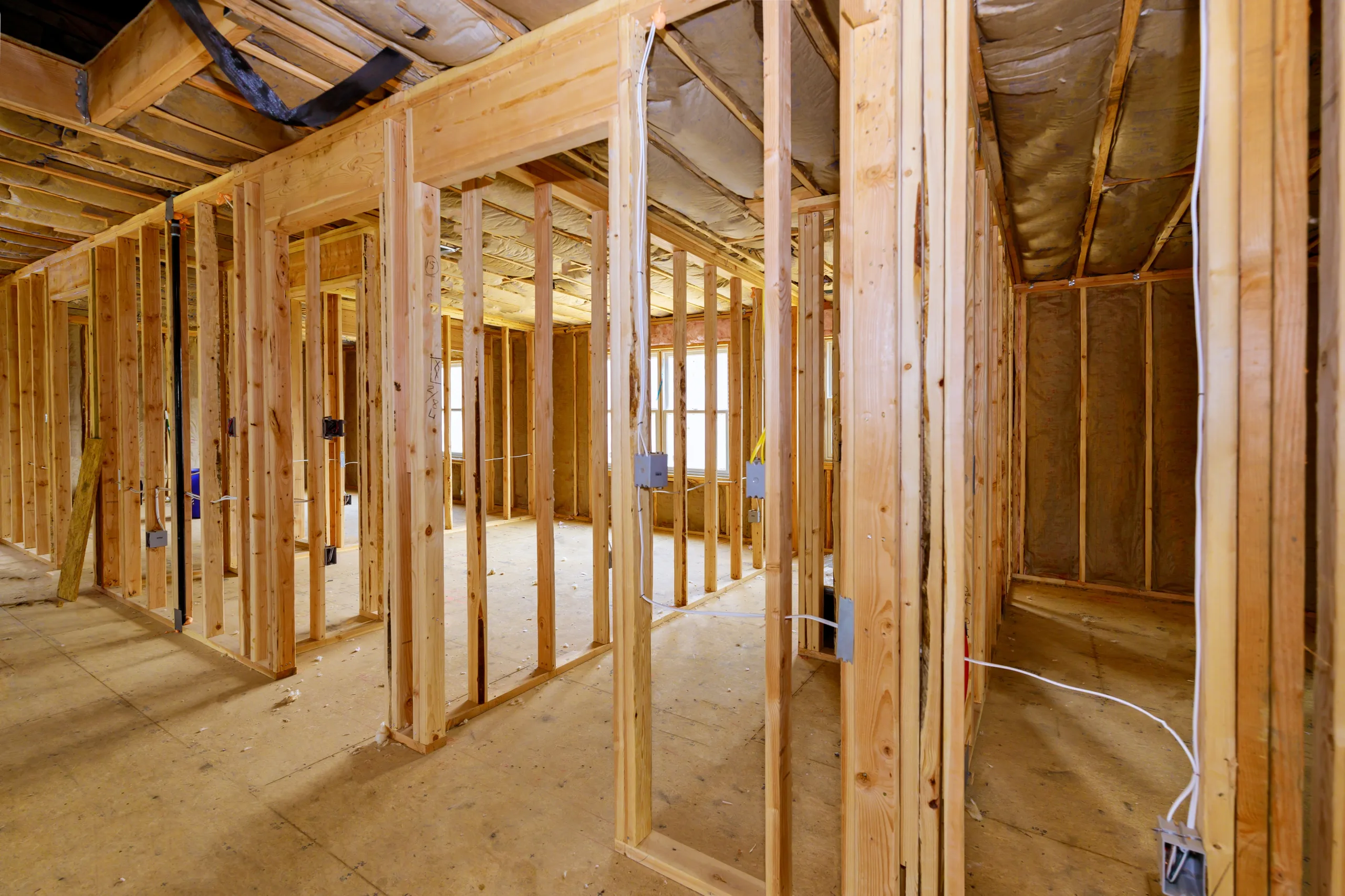
The model home is the builder’s best sales tool. It is furnished, staged, upgraded, and lit like a magazine shoot. Your home will not look like that on move-in day. It will look like a construction site with drywall dust. That is normal. What matters is what is in your contract: the floor plan, the upgrades you chose, the finishes you paid for. Walk your actual home at every stage, and get an independent third-party inspector at various stages of the build, not just at the end.
Builder incentives — read them like a loan officer, not a shopper
Builder incentives are real money — closing-cost credits, rate buydowns, free upgrades. But read them like a loan officer, not a shopper. A $20,000 incentive on a $700,000 home is not the same as a $20,000 price cut. Ask what the incentive actually covers, whether it changes your loan amount, and whether you would have gotten a better deal by negotiating the price instead. And check whether the incentive requires you to use the builder’s lender — because that lender may not be the cheapest one for you.
What to watch before you sign
The timeline. Build dates move. Your rate lock has an expiration. If the build slips past your lock, you pay to extend it or you take the new rate. Your agent tracks the milestones and keeps your lender in the loop.
The appraisal. The appraiser values your home — base plus upgrades — against comparable sales. If it comes in low, you renegotiate, you pay the difference, or you walk. The bank won’t lend on a house that isn’t worth it.
The contract. It is the builder’s contract, written by the builder’s lawyers. Read the delay terms, the deposit terms, and what happens if you walk away. Get someone on your side to read it before you sign.
The warranty. What does the builder warranty actually cover, for how long, and what is the process for getting something fixed? Get it in writing before you close.
The final walkthrough. Punch list, in writing, before you close — not after you have moved in and the builder has your money.
Who pays for what
On a new build, the builder typically covers the cost of the home itself and the lot. You cover the upgrades you chose, the closing costs, and the prepaid items (taxes, insurance, interest). Your agent’s commission is typically paid by the builder — not by you. That is why there is no reason not to bring your own agent. I go deep on that in New Construction Homes: Do I Need an Agent?.
Odds and ends — the hidden costs
Solar. California requires solar on new homes. The builder installs it. Ask whether it is owned or leased, what the payment is, and what happens if you sell. Solar systems typically cost $5,000 to $20,000 depending on size and type — ask what yours costs and who owns it.
Landscaping. The builder may leave you a dirt yard. Budget for landscaping — it is not in the base price unless the contract says it is.
Rental and investment limits. Some communities restrict rentals. If you think you might rent the home out later, check the HOA and community rules before you buy.
Taxes. New construction is reassessed when you close. Your first tax bill may be higher than you expected — budget for it.
Dat’s take
New does not mean simple. The house is new — the contract, the timeline, and the incentives are where buyers get hurt.
What to do with this
- Pick your agent before you visit the sales office — and bring them on visit one. I explain why in New Construction Homes: Do I Need an Agent?.
- Get pre-approved first — start your pre-approval.
- Run the payment on the real price — base plus upgrades — in the Mortgage Payment Calculator.
- Read Seller Concessions: How to Get the Seller to Pay Your Closing Costs (2026) if the builder is offering credits — know what they actually cover.
Hear me talk through new construction on the podcast in Episode 17: listen here.
Rates in this post: FHA 30-year fixed 6.94% (November 6, 2026); conventional 30-year fixed 7.18% (Freddie Mac PMMS, week ending November 5, 2026). Property tax 1.25% of price and insurance ~0.5% of value per year are planning figures — your county and your quote will differ. This is education, not a rate quote or a loan approval. Dat Nguyen, Certified Mortgage Advisor, NMLS 1379110.