
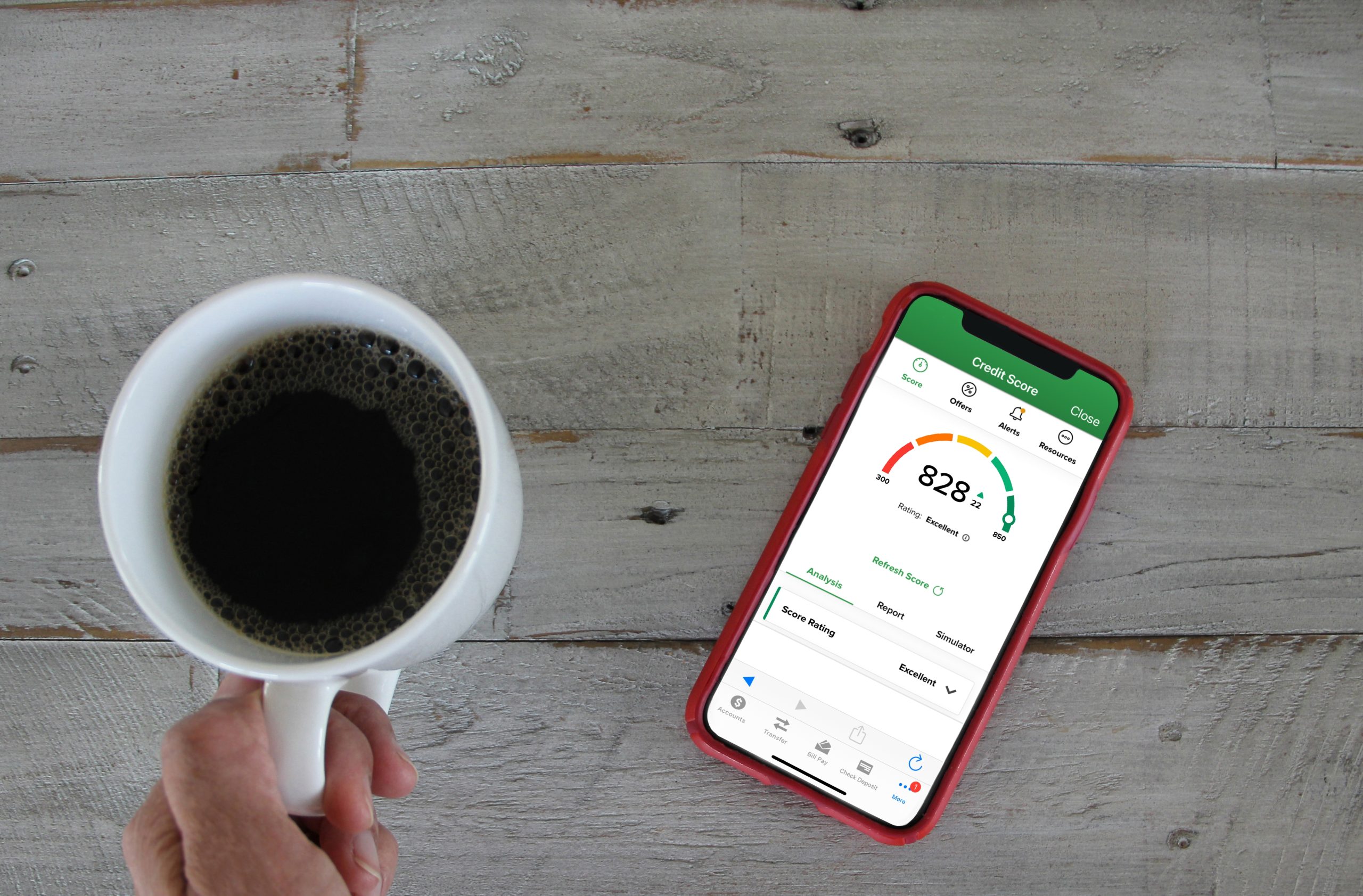
A client told me his Credit Karma score was 740. He’d checked it that morning, and he was ready to buy. Then I ran his credit and the mortgage score came back 671. Same person, same debts, same history — 69 points apart. And 671, not 740, was the score his loan depended on.
That’s not a mistake. It’s how credit scores work, and if you don’t understand it, you’ll make expensive decisions on wrong numbers.
Credit Karma shows you a VantageScore — not a mortgage score
Credit Karma shows you a VantageScore 3.0. It calculates it from your TransUnion and Equifax reports. VantageScore is a real scoring model, built by the three credit bureaus themselves. It’s used by some lenders, some landlords, some credit card companies.
But mortgage lenders don’t use it. Mortgage lenders use FICO. Specifically, they use older FICO models — FICO Score 2, 4, and 5 — the ones Fannie Mae, Freddie Mac, and FHA require. The score you see on Credit Karma was never the score your mortgage would be priced on.
VantageScore and FICO weight the same facts differently. Payment history is 41% of VantageScore and 35% of FICO. Credit age and mix is 21% of VantageScore and 15% of FICO. Balances are 20% of VantageScore and 30% of FICO. New accounts are 11% of VantageScore and 10% of FICO. Available credit is 6% of VantageScore and 10% of FICO.
The point isn’t which model is better. The point is they’re different formulas applied to different data, so they give different answers. A thin file (very little credit history to judge), a recent late payment, a high balance on one card — each one moves the two scores by different amounts. That’s why the same person can be 740 on one app and 671 on a mortgage pull.
What is a credit score, really?
A credit score is a three-digit number that summarizes your credit report. It’s a prediction: how likely are you to pay back money you borrow? The higher the number, the lower the risk the lender sees.
There is no single score. There are dozens of FICO versions alone — FICO Score 8, 9, 10, the mortgage models, the auto models, the bankcard models — plus VantageScore 3.0 and 4.0. When someone asks “what’s your credit score?” the honest answer is “which one?”
The one that matters for buying a house is the mortgage FICO score — the middle score of the three bureaus, on the FICO 2/4/5 models. That’s the one your rate, your PMI price (PMI is private mortgage insurance — what you pay when you put less than 20% down), and your approval all hang on.
And yes, the score that matters is the one you can’t see for free. Credit Karma doesn’t show it. Your credit card’s free score doesn’t show it. The only way to see your mortgage score is to have a lender pull your credit — which is a hard inquiry, and which you should do when you’re actually ready to buy, not a year early.
Why the mortgage score is usually lower
In my experience, the mortgage score usually comes in lower than the score people see on free apps. A few reasons why.
The mortgage models are older. FICO 2, 4, and 5 are from the 2000s. They penalize things the newer models forgive faster — a single late payment from three years ago can still weigh heavily. A collection account, even a small one, can cost you 50 points on the mortgage model and barely register on VantageScore.
The mortgage pull uses all three bureaus, and takes the middle. If your TransUnion is 740, your Equifax is 720, and your Experian is 671, your mortgage score is 720. Credit Karma shows you TransUnion and Equifax only — and it shows the higher of the two models. The mortgage pull works differently: your lender pulls all three bureaus and uses the middle score of the three — not the highest, and not the weakest.
Utilization hits harder. FICO counts how much of each card’s limit you’re using, not just your total. One maxed-out card with a $500 limit can hurt your mortgage score even if your overall utilization is 10%.
What score do you actually need?
Here’s where the number turns into a loan decision. The minimums, plain English:
- Conventional: 620. That’s the floor. At 620–679 your rate is noticeably higher and your PMI is expensive. At 680+ it gets reasonable. At 740+ you get the best pricing.
- FHA: 580 for 3.5% down. At 500–579, FHA still works but you need 10% down. Below 500, FHA won’t take you.
- VA: no minimum set by the VA itself. Lenders set their own — most want 580 or better, and the best pricing starts around 620–640.
But “minimum” is not “good.” A 620 score gets you a loan. A 740 score gets you a loan that costs hundreds less per month. On a $700,000 house, the rate difference between a 620 borrower and a 740 borrower can be half a percent or more — that’s $200+ a month, $2,400+ a year, $72,000 over thirty years.
So the question isn’t “can I get a loan with this score?” It’s “how much is this score costing me, and is it worth waiting to improve it?” Sometimes the answer is to buy now. Sometimes the answer is to spend three months paying down a card and save $70,000. I run both numbers for every client.
So what do you do about it?
First, get your real reports. Pull your free reports at AnnualCreditReport.com — all three bureaus, once a week if you want. Look for errors: accounts that aren’t yours, balances that are wrong, late payments you actually made on time. Dispute them. A single corrected error can move your score 30+ points.
Second, pay down revolving balances — especially the small maxed-out card. Utilization is the fastest lever you have. Getting a card from 90% used to under 30% can move your score in a month.
Third, don’t open new accounts while you’re shopping for a house. A new card drops your average account age and adds a hard inquiry. Do it after you close.
Fourth, don’t close old cards. Your oldest card is anchoring your credit age. Close it and your average age drops.
Fifth, when you’re ready, get a real mortgage pull. I’ll run it, show you the actual score, and tell you exactly what your rate and PMI look like — and whether waiting three months would save you real money. That’s a free conversation, and it’s the only way to know your real number.
My Take
Credit Karma is a weather app. Your mortgage score is the weather. Check the app, but dress for the real one.
What to do with this
- Pull your free reports at AnnualCreditReport.com and look for errors before you do anything else.
- If you carry balances, get your cards under 30% used — starting with the smallest maxed-out one.
- Check your income side in How Much Do I Need to Make to Afford a $700,000 House in California? and your loan options in What Is a Conventional Loan?.
- Then start your pre-approval and I’ll pull your real mortgage score and show you what it actually costs you — or saves you.
FICO is used in over 90% of lending decisions in the United States. The FICO score versions used for mortgages — FICO Score 2 (Experian), FICO Score 4 (TransUnion), and FICO Score 5 (Equifax) — are required by Fannie Mae, Freddie Mac, and the FHA. VantageScore 3.0 is the model shown by Credit Karma. Score factors and weightings are from FICO and VantageScore published materials, verified November 8, 2026. Your actual score and rate depend on your full credit file. This is education, not a rate quote or a loan approval. Dat Nguyen, Certified Mortgage Advisor, NMLS 1379110, Everyday Lending Group.
First Time Home Buyer Pros Podcast — Episode 5: What Is a Credit Score — and Is Credit Karma Accurate?